

A septic system collects and treats wastewater for homes that cannot connect to a municipal sewer line. It plays a vital role every day in protecting our environment. The parts of your system can vary depending on how old it is and the type of land you have. To understand how it works, it is important to know what each part does, what its limits are, and how to spot them on your property.
Conventional Septic System: The Septic Tank and Drain Field
The septic tank and the drain field are the two best-known parts of a septic system. Together, they hold back solid waste and treat wastewater before it returns to the environment. This system uses an eco-friendly approach to manage wastewater by letting nature purify the water effectively. When a property can support this “conventional” setup, it is often the ideal solution.
1. The Septic Tank
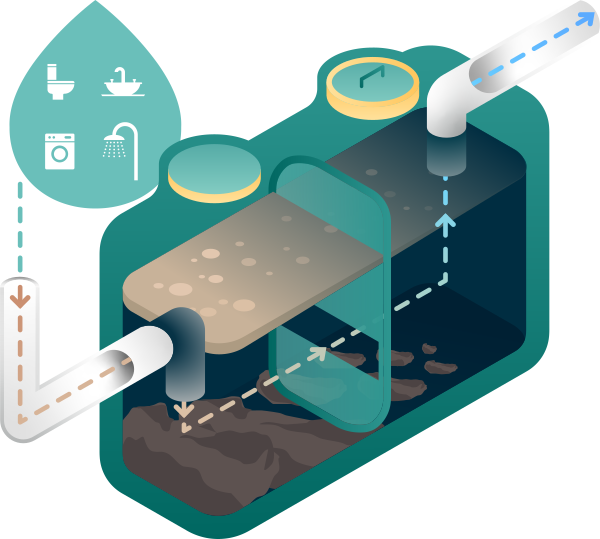
The septic tank is the first stop for wastewater after it leaves your home. It is designed to separate solids from liquids. Inside the tank, “good” bacteria go to work breaking down organic matter. In newer systems, an effluent filter (or pre-filter) is also used to stop foreign objects from moving further into the system.
The septic tank is easy to find on your property. Look for one or two lids made of concrete or PVC. These access points are used for the mandatory pump-outs required by law.
2. The Drain Field
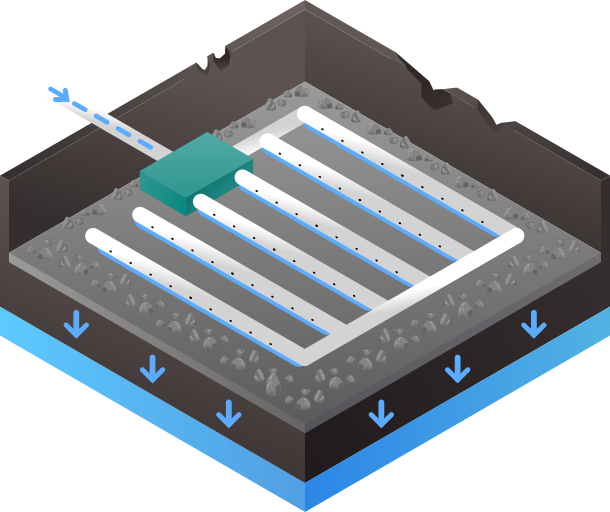
The drain field (or leach field) is a network of trenches or drainage beds made of stone. Located underground and filled with filtering materials like sand and gravel, it spreads the wastewater over a specific area for a final biological treatment. At this stage, bacteria in the soil remove any remaining contaminants before the water safely returns to the environment.
You can usually spot the drain field by looking for a flat area on your property that is clear of large trees or heavy bushes.
For a conventional septic system, all you will typically see are two concrete or PVC lids, placed either in a line or at an angle. It is important to remember that this entire area must stay clear of vehicle traffic, and no heavy objects should ever be placed on top of it.
How It Works: A 5-Step Process
A conventional system, made up of a septic tank and a drain field, follows these five main steps to treat your wastewater:
1. Wastewater Collection
All the water from your toilets, sinks, showers, washing machines, and other appliances is carried from your home to the septic tank through a main inlet pipe.
2. Separation of Solids
Inside the septic tank, nature takes over. Heavier solids and grease naturally separate from the liquids. The heavy waste sinks to the bottom to form a layer of sludge, while lighter waste floats to the top.
3. Biological Decomposition
“Anaerobic” bacteria (bacteria that live without oxygen) inside the tank begin to break down the organic matter. They turn some of the waste into gas and clearer liquids.
4. Purification in the Drain Field
The clarified wastewater leaves the tank and moves into the drain field. It slowly soaks through the filtering materials in the ground. Here, soil bacteria provide a final biological treatment, breaking down any remaining contaminants.
5. Return to the Environment After passing through the drain field, the treated water filters into the ground, joins the groundwater, or is soaked up by nearby plants. This final process ensures the water is safe and clean before it returns to nature.
The 4 Main Benefits of a Conventional System
-
No Power Required: It works entirely without electricity or complex technology.
-
Simple Maintenance: It requires no extra upkeep beyond regular pump-outs and cleaning the effluent filter.
-
No Annual Fees: You don’t have to pay for yearly maintenance contracts or service fees.
-
Lower Initial Cost: It is generally less expensive to install compared to more advanced technologies.
3 Things to Know Before Choosing a Conventional System
-
Space Requirements: You need a large area of open land for the wastewater to soak into the ground.
-
Specific Soil Conditions: The soil must be the right type and deep enough to allow for proper filtration.
-
Limited Lifespan: A conventional system usually lasts between 20 and 30 years before it needs to be replaced.
Other Components of a Septic System
Not every home uses a standard setup. Differences usually depend on how old the system is or the specific layout of the land. For example, if a lot is too small or the soil is too heavy, a conventional tank and drain field simply won’t work.
The Cesspool (Puisard)
A cesspool is essentially just a hole in the ground. Its only job is to collect a home’s wastewater. These were common before 1981, when Quebec introduced stricter environmental laws. You can sometimes spot them by a wood, concrete, or plastic lid. Unfortunately, many are completely buried and invisible. If your home isn’t on city sewers and you don’t have a septic tank, you likely have a cesspool.
Advanced Secondary Treatment Technology
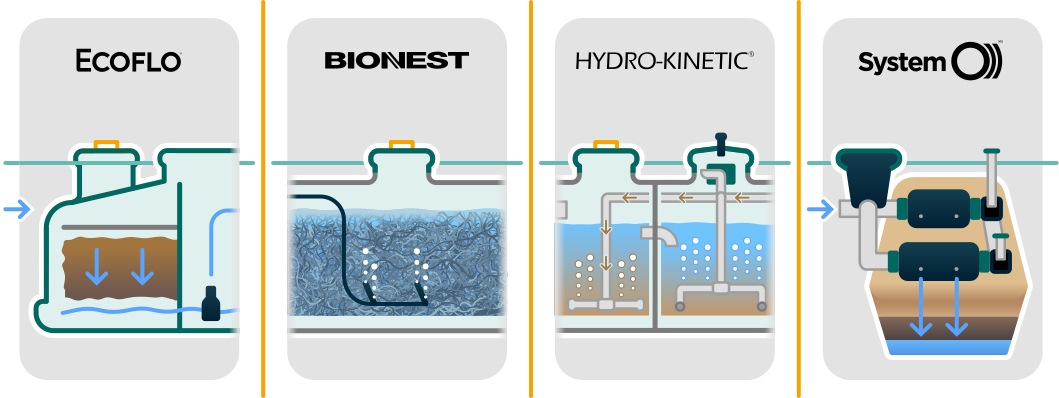
Sometimes, an extra treatment step is needed between the septic tank and the drain field. This is common for small lots or land where the soil doesn’t absorb water well. In Quebec, common brands for these systems include Bionest, Ecoflo, Hydro-Kinetic, and System O)).
These systems have only been around for a few decades. You can check your property records or municipal files to see if you have one. They are easy to spot because they have extra rectangular or circular lids in addition to the main tank lid. You might also see a vertical vent pipe sticking out of the ground near the drain field.
Explore our specific guides to learn more about how these systems look on your property:
The Sand Filter
A sand filter works like a regular drain field, but it uses specialized sand instead of stone. This allows it to filter water in soil conditions where a standard field would fail. These can be buried or “above-ground.” If it is above-ground, you will notice a raised or mounded area on your lawn.
The Seepage Pit (Puits absorbant)
A seepage pit is an alternative to a traditional drain field, used specifically for properties with very deep, sandy soil. It is connected to the septic tank and may also have a concrete access lid visible at the surface.
How to Identify Your Septic System
To confirm which type of septic system serves your home, follow these three simple steps:
A. Check Your Personal Records
Your property documents are the first place to look for information about your septic system. You should have received these when you bought your home. They will specify exactly what type of system was installed.
B. Contact Your Municipality or MRC
For many years now, Quebec municipalities have been required to keep a registry of the septic systems on their territory. If your system was built after 1981, your municipality should be able to give you details on its type and location.
Note: Because the provincial laws requiring this paperwork only started in 1981, it can be very difficult to find official records for any system built before that date.
C. Ask a Septic System Expert
If you still can’t find clear information or if you have doubts about what you’ve found, you can have your system inspected by a specialist. This is the only way to know for certain exactly what kind of system you have.
In Short
By knowing which type of septic system serves your home and understanding how its different parts work, you will be able to maintain it properly. It also makes it much easier to ensure your system meets current Quebec environmental standards.
Don’t hesitate to contact our Soluo experts for more information on the different types of septic systems or to schedule a professional inspection of your installation.

About the Author
Étienne Gaudette
Chief Executive Officer (CEO)
Étienne Gaudette is the president of the Soluo Group, a company specializing in inspection, design and residential septic installation work serving the majority of regions of Quebec for more than 30 years. Thanks to his creative mind and his background in marketing consulting and as director of the group of experts in decentralized water management at Réseau Environnement, Étienne brings a unique vision to the on-site sanitation industry in Quebec in order to bring together the all industry players for the benefit of Quebecker. One goal: Change the world, one septic installation at a time.
You liked this post?
Share


Our certification