

Setting up a drain field is a vital step for any Quebec home not connected to city sewers. This system treats your wastewater by filtering it through the soil. This process removes contaminants before the water safely returns to the environment.
However, designing and installing a drain field is not a “DIY” project. You must follow strict provincial rules under the Regulation respecting waste water disposal and treatment for isolated dwellings (Q-2, r.22). This article explains the requirements for a drain field in Quebec, the key steps to follow, and common mistakes to avoid.
What is a Drain Field?
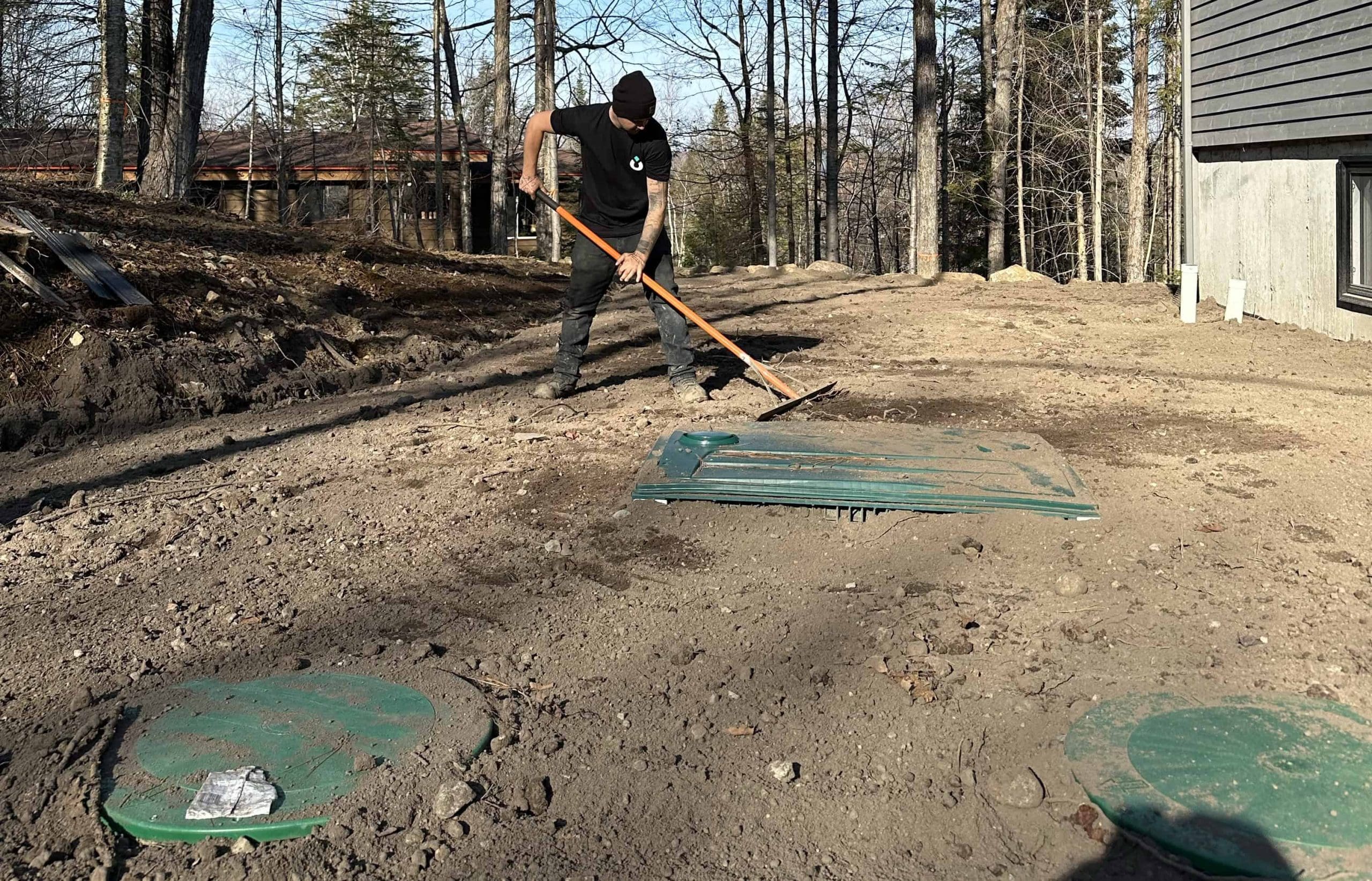
A drain field (also called a leach field) is the part of your septic system where the final treatment happens. It is a network of perforated pipes buried in gravel or specialized filter beds.
As pre-treated water from your septic tank flows into the field, it slowly soaks into the ground. A mix of mechanical filtering by the soil and natural “good” bacteria breaks down organic matter and pathogens. This ensures the water is clean before it reaches the groundwater table.
Key Components
-
Distribution Pipes: These PVC pipes carry water from the tank to the field. They have small holes to spread the liquid evenly. They sit on a bed of gravel to prevent clogs and ensure steady flow.
-
Filter Bed or Trenches: This is where the magic happens. A filter bed uses layers of specific sand or gravel to trap impurities. In a trench system, the pipes sit in gravel-filled rows where bacteria in the soil finish the cleaning process.
Conditions for Installing a Drain Field in Quebec
Quebec laws are designed to protect our lakes, rivers, and drinking water. Here are the main rules you must follow:
1. Mandatory Soil Analysis
Before you dig, you must have a soil test. This determines if your land can actually “absorb” and filter water. This study will:
-
Identify the type of soil (sand, clay, silt, etc.).
-
Find the depth of the groundwater table (water table).
-
Check the slope of the land to prevent runoff.
-
Who does this? Only a certified professional technologist or a licensed engineer.
2. Minimum Distance Requirements
To prevent contamination, the law sets strict “setback” distances:
-
30 meters: Minimum distance from a drinking water well.
-
15 meters: Minimum distance from a lake or stream.
-
90 to 120 centimeters: The minimum vertical gap required between the bottom of the drain field and the groundwater table.
Your land size and soil depth must also match the number of bedrooms in your house to ensure the system isn’t overloaded.
3. Obtaining Permits
You cannot start work without a municipal permit. To get one, you must show:
-
The official soil analysis report.
-
Design plans created by an engineer or technologist.
-
The exact location where the system will be built.
4. Professional Installation
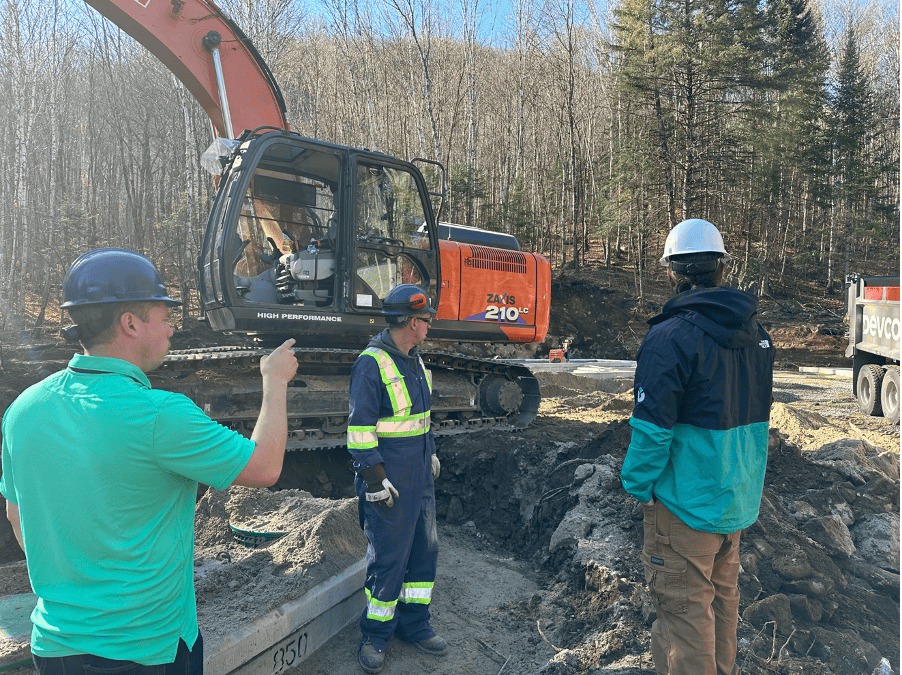
The work must be done by a contractor with a valid RBQ license. A pro ensures the system is level, the gravel is clean, and the pipes are placed correctly. A bad installation will lead to a short lifespan and soggy lawns.
5. Maintenance and Inspection
A drain field isn’t “set it and forget it.” To keep it working:
-
Pump the tank: Have your septic tank emptied every 2 to 4 years.
-
Regular checks: Have a pro inspect the field for signs of clogging or saturation.
Common Mistakes to Avoid
-
Skipping the Soil Test: Installing a system without knowing your soil type usually leads to total failure and very expensive repairs.
-
Ignoring Distances: Placing a field too close to a well or lake can contaminate water and lead to heavy fines.
-
Hiring Unlicensed Labor: If the contractor doesn’t have an RBQ license, your municipality may refuse to approve the work, and you will have no protection if the system fails.
-
Lack of Maintenance: If you don’t pump your tank, solids will flow into the drain field and clog it permanently.
In Short
Setting up a drain field in Quebec requires careful planning, following environmental laws, and hiring the right pros. By meeting these conditions, you protect your property value and our beautiful Northern Quebec wilderness.
Need help with your project? The Soluo experts are here to guide you through every step—from the first soil test to the final inspection of your new system.

About the Author
Étienne Gaudette
Chief Executive Officer (CEO)
Étienne Gaudette is the president of the Soluo Group, a company specializing in inspection, design and residential septic installation work serving the majority of regions of Quebec for more than 30 years. Thanks to his creative mind and his background in marketing consulting and as director of the group of experts in decentralized water management at Réseau Environnement, Étienne brings a unique vision to the on-site sanitation industry in Quebec in order to bring together the all industry players for the benefit of Quebecker. One goal: Change the world, one septic installation at a time.
You liked this post?
Share

Our certification